Think beyond the color
Consider the scale of the pattern against the wall, furniture, windows, and trim. A large print can create a focal point; a smaller repeat or a textured finish can bring a quieter rhythm.
A practical starting point
Choosing a pattern is the fun part. Understanding your walls, your material, and the layout helps you prepare for the rest.
Talk about your project01 / Choose
Start with how the space is used, then look at the pattern and the product’s requirements. A sample viewed in the room can look different throughout the day.
Consider the scale of the pattern against the wall, furniture, windows, and trim. A large print can create a focal point; a smaller repeat or a textured finish can bring a quieter rhythm.
Check whether the wallcovering is pasted, unpasted, or peel-and-stick. Note the manufacturer, product name, roll dimensions, pattern repeat, and installation instructions. Different materials need different preparation and handling.
For bathrooms, kitchens, and busy spaces, check the manufacturer’s guidance for moisture, cleaning, and intended use. Ventilation and distance from direct splashes matter; not every wallcovering suits every wall.
02 / Measure
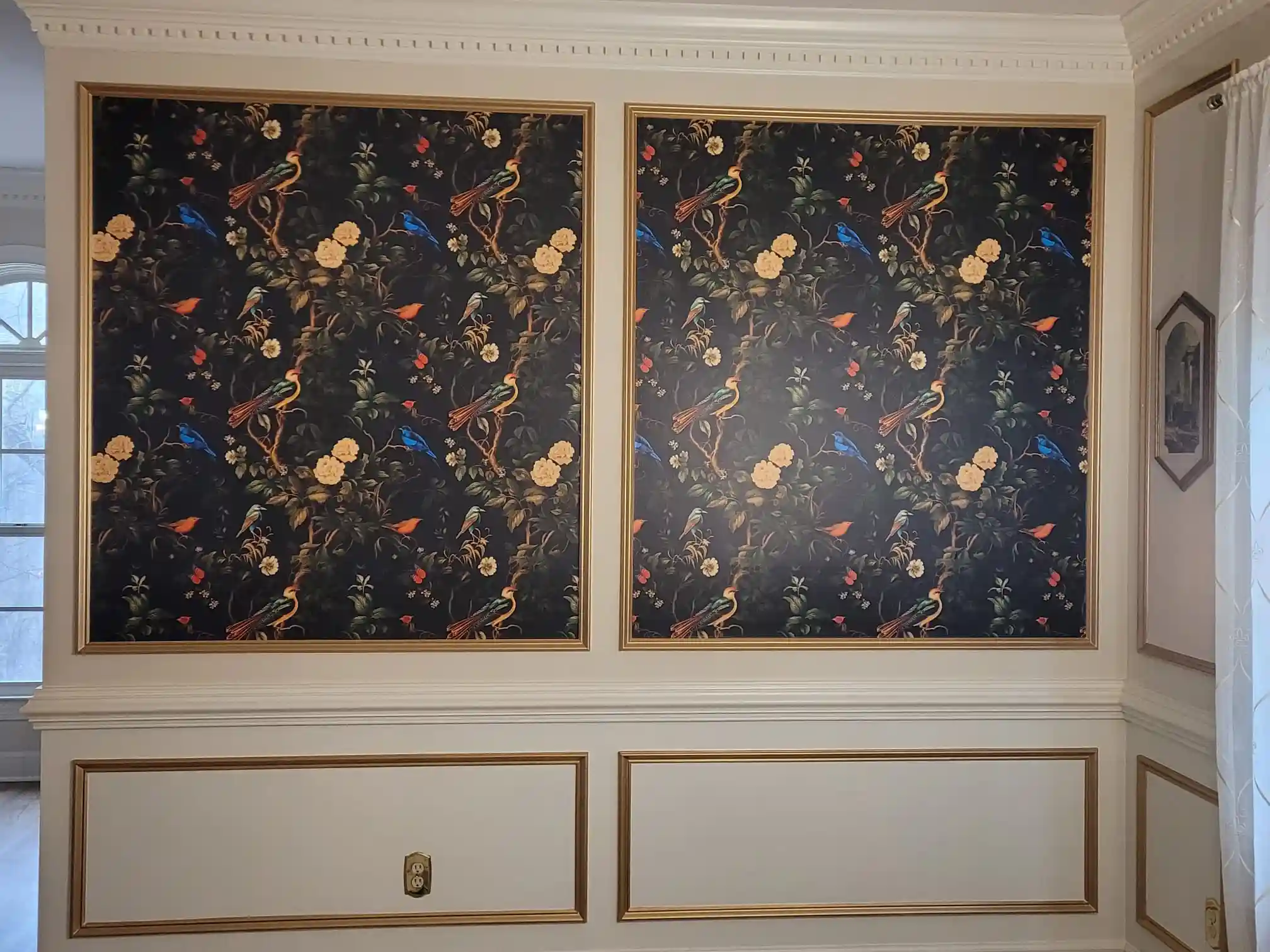
Measure the width and height of each wall you are considering. Note doors, windows, sloped ceilings, built-ins, and any areas inside molding. Photos of the whole wall and close-ups of problem areas are useful, too.
A pattern repeat, mural panel layout, trimming, and roll dimensions all affect the amount needed. Share your measurements and product details before ordering; check dye lots or batch numbers when the material arrives, and keep the manufacturer’s instructions.
Not sure how to account for a stairwell or a complicated layout? Include a sketch and ask before making assumptions about quantities.
03 / Prepare
Even beautiful paper reflects the condition of the surface beneath it. Mention anything unusual early so the work can be planned around it.
Tell us if there is old wallpaper, loose material, or adhesive residue. Existing paper often needs to be removed rather than covered over. Learn about wallpaper removal.
Cracks, holes, rough texture, peeling paint, and glossy surfaces can affect the finish or adhesion. The preparation needed depends on the wall and the product; see wall preparation.
Address any active leak or dampness first. Let us know if a wall has just been painted; paint and primers need appropriate drying or curing time according to the products used.
Check product instructions before priming or applying any coating. Peel-and-stick and other specialty materials may specify particular surfaces or products. Discuss uncertainties before starting.
04 / Process
Tell us your city, the space, and the service you need. Approximate dimensions, material details, and photos can help if you have them, but you can call even if you have not measured yet.
Discuss the surface, material, layout, preparation, and timing. The plan depends on the actual walls and the product you choose.
Make room near the walls by moving furniture and fragile items. Discuss access, fixtures, pets, and anything else that may affect the work area beforehand.
After installation, follow the wallcovering and adhesive manufacturers’ guidance for drying and cleaning. Ask about any product-specific care questions.
Questions people often have
Texture can show through and may interfere with adhesion. The answer depends on the texture and the material; the wall may need preparation first.
Many products can be used in appropriate bathroom settings, but suitability varies. Check the manufacturer’s instructions and consider ventilation, humidity, and exposure to water.
That depends on the wall measurements, roll size, pattern repeat, and layout. Share the product specifications and dimensions before ordering so those details can be considered.
No. Surface texture, paint condition, primer, and curing time can all matter. Check the specific product’s instructions and share them when you inquire about peel-and-stick installation.
Often, yes. Existing paper or adhesive can affect the new finish, but the wall needs to be assessed. Mention any old layers when you contact us about removal.
Yes. Murals and other specialty wallcoverings have individual layout and handling needs. Send the product instructions and the wall dimensions to start the discussion.
Keep the wall accessible, move furniture and delicate items away from the work area, and discuss fixtures and pets in advance. Bring up any surface concerns or recent painting before the work is scheduled.
Follow the manufacturer’s care instructions for your specific material. Cleaning methods vary, and some finishes are more delicate than others. Avoid assuming a product is washable just because another wallpaper is.
When you are ready
Whether the paper is already in hand or you are still comparing options, a few details about the room are a helpful place to start.
Request an estimate